
Fields in Fulton County Tax Records
Fulton County property tax records tell one story in four chapters: who owned the parcel on January 1, what the assessor valued it at, which exemptions trimmed the taxable base, and where the bill stands today. To search Fulton County property tax records by address, begin with the assessor's roll and values. Then confirm the bill's status with the collecting office. A few quirks matter. Agricultural classification can hold the assessment far below market expectations, and a deed recorded after the assessment date can be newer than the name printed on that year's bill. Keep the tax year attached to every figure, and confirm any current balance directly, since delinquent lists and office records shift after publication.
| Field | What It Shows | Where |
|---|---|---|
| Assessment | Land, improvements, and the value placed on real property | Fulton County PVA |
| Owner for the tax year | The owner listed as of January 1 | PVA certified tax roll |
| Exemption or classification | Relief or special treatment applied to qualifying property | PVA |
| Current bill and payment | Tax charged and collection status during the regular cycle | Fulton County Sheriff |
| Delinquent certificate | Bill number, owner, amount due, map number, and description | County Clerk and County Attorney |
An assessment is not a sale price. Kentucky directs PVAs to estimate fair cash value through accepted sales, cost, and income approaches. Qualifying agricultural land may instead receive a use-based value. Tax rates and any valid exemptions then act on the taxable base to produce the bill. A recorded deed may state its consideration. Even that number needs context before anyone treats it as market evidence.
Fulton PVA and January 1
The Fulton County PVA site is where an assessment lookup starts. Kentucky's property tax calendar makes January 1 decisive. Whoever is listed on that date stays the tax-bill owner for the whole assessment year, even if a deed is recorded afterward. A current deed and a current-year bill can therefore disagree without either record being wrong.
Write down the tax year, owner name, situs address, mailing address, map number, and assessment for every inquiry. A mailing line may route the bill to an out-of-county owner, a trustee, or an in-care-of recipient. It says nothing about where the land lies. When a transfer occurred after January 1, compare the PVA result against the newest recorded deed before drawing conclusions.
Fulton Assessments Change Each Year
Most real property in Kentucky is assessed each year. Every parcel must receive a physical inspection at least once every four years, according to Kentucky Revenue. Annual revaluation does not mean staff walk through every building annually. Sales, property characteristics, cost data, income evidence where relevant, and the inspection cycle can all shape the roll.
The Kentucky real-property assessment page lays out the statewide valuation methods and inspection rules.
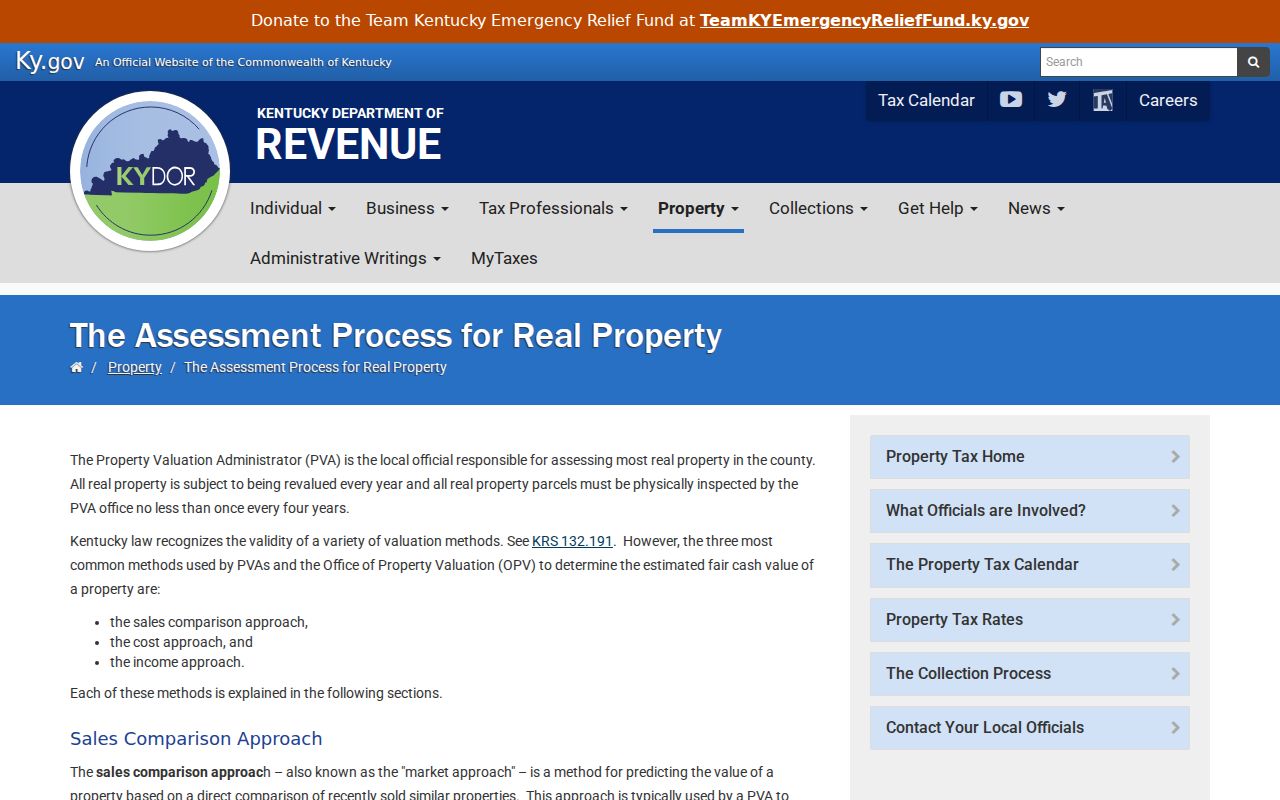
The state page describes the framework. The Fulton County PVA applies it parcel by parcel to the county roll.
Timing matters when comparing Fulton County property tax records across years. A new improvement, a land split, an exemption, a classification change, or a recent sale can update one part of the record. Another source may lag behind. Save copies of the exact assessment years being compared. A screenshot with no year attached can lead to a poor appeal or purchase decision.
Agricultural Value in Fulton County
Fulton County carries extensive farm land. Kentucky's agricultural-use treatment is one of the biggest traps in a quick value search. Qualifying property may be assessed for its agricultural or horticultural use. That applies rather than its open-market development value. The use figure can sit far below what a buyer calls market value.
Ask the PVA which classification and value fields apply to the tract. Never multiply a use assessment into a sales estimate. When land changes use, separate rules may affect later assessments. The Kentucky assessment process explains the statewide valuation methods and agricultural treatment. The local PVA applies them to Fulton parcels.
Compare like with like. An agricultural-use assessment, fair cash value estimate, taxable assessment, and deed consideration answer different questions.
Fulton Homestead and Disability Relief
Kentucky offers a homestead exemption for qualifying owners and a disability exemption under stated conditions. The PVA administers these property-based benefits and publishes the forms through its official site. Eligibility turns on the governing rules and documentation. It does not hinge on age alone or a claim that the property serves as a home.
Ask which form applies. Ask what proof is required. Ask which assessment year will first reflect approval. The roll may show an exemption without listing every supporting document behind it. A lower taxable result does not shrink the recorded acreage or alter the deed. Keep the approval alongside its matching tax year so later bill comparisons stay clear.
How Fulton County Tax Lookup Works
Fulton County publishes no ordinary public current-bill search form. Start with the PVA for the parcel and its assessment, then contact the Fulton County Sheriff for current collection status. For a delinquent year, turn to the County Clerk's list and the County Attorney's collection information. This chain of fallbacks beats assuming some unrelated search page covers Fulton County.
- Use the PVA link or call the PVA with the situs address and map number. Confirm the assessment year and January 1 owner.
- Contact the Fulton County Sheriff for the current bill, accepted payment method, and posted collection status.
- For an unpaid older bill, check the clerk's delinquent list and ask the County Attorney for a current payoff or installment information.
- Record the date of each answer. A certificate purchase, notice, court step, and deed are distinct events.
- Assessed value
- The value entered by the PVA for property-tax administration.
- Levy
- A tax rate imposed by a taxing authority and applied to the taxable base.
- Homestead exemption
- A reduction available to an eligible owner under Kentucky rules.
- Tax lien
- A legal claim tied to unpaid property taxes.
The Kentucky property tax calendar shows the statewide sequence of listing, inspection, conference, and collection.
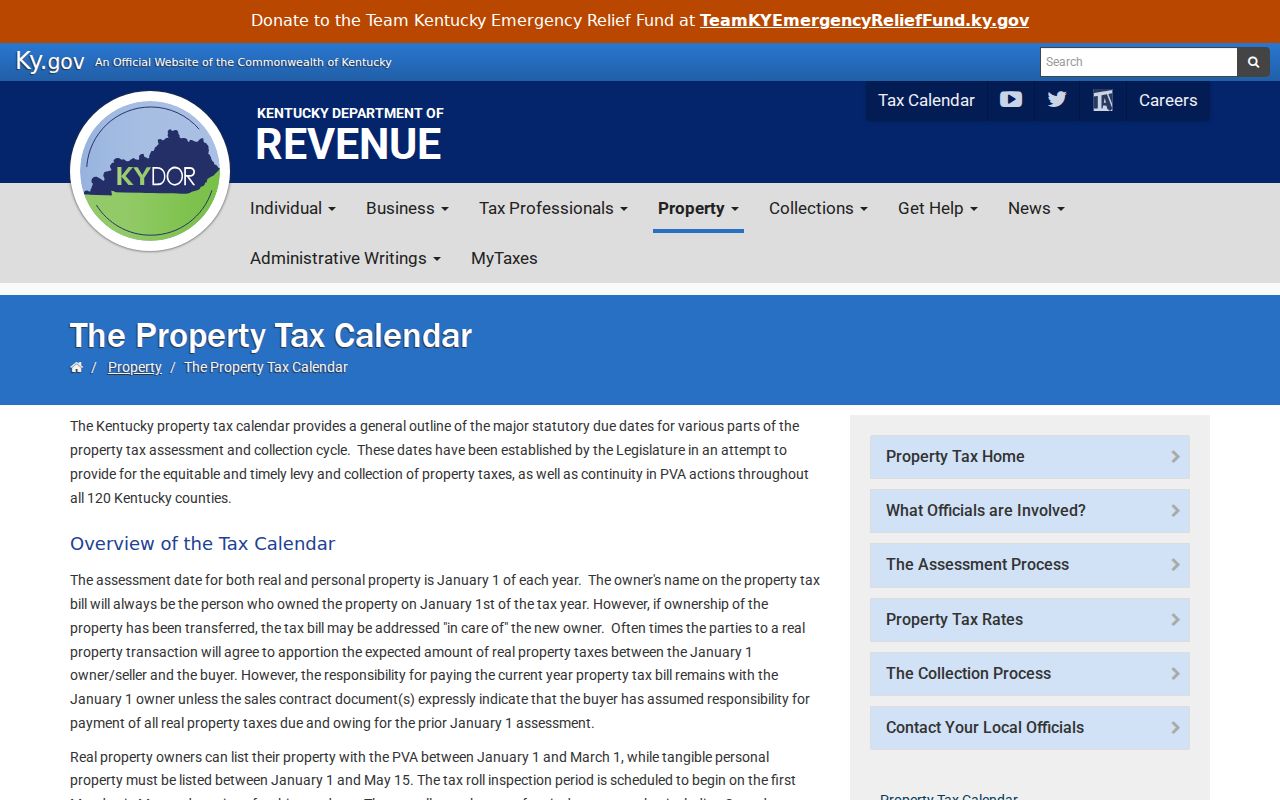
Use the calendar to identify the stage. Then verify the current Fulton County date and office status before acting.
Fulton's 2024 Delinquent Fields
Fulton County's County Clerk delinquent-tax page lists five fields for each entry: Bill Number, Owner, Amount Due, Map Number, and Description. That layout makes the list easy to scan. The 2024 figures prove delinquency for that cycle only. They are not a live payoff, because interest, fees, payments, certificate purchases, and later legal steps can all change the balance or the status of a parcel.
| List Field | Best Use | Check Next |
|---|---|---|
| Bill number | Identify the tax account | Quote it to the clerk or attorney |
| Owner | Match the listed tax-year party | Compare with January 1 roll and deed |
| Amount due | See the posted list amount | Request a current payoff |
| Map number | Tie the row to a parcel clue | Confirm with PVA |
| Description | Screen for the target land | Compare with deed description |
The Fulton County delinquent list is the official source page behind the field inventory above.
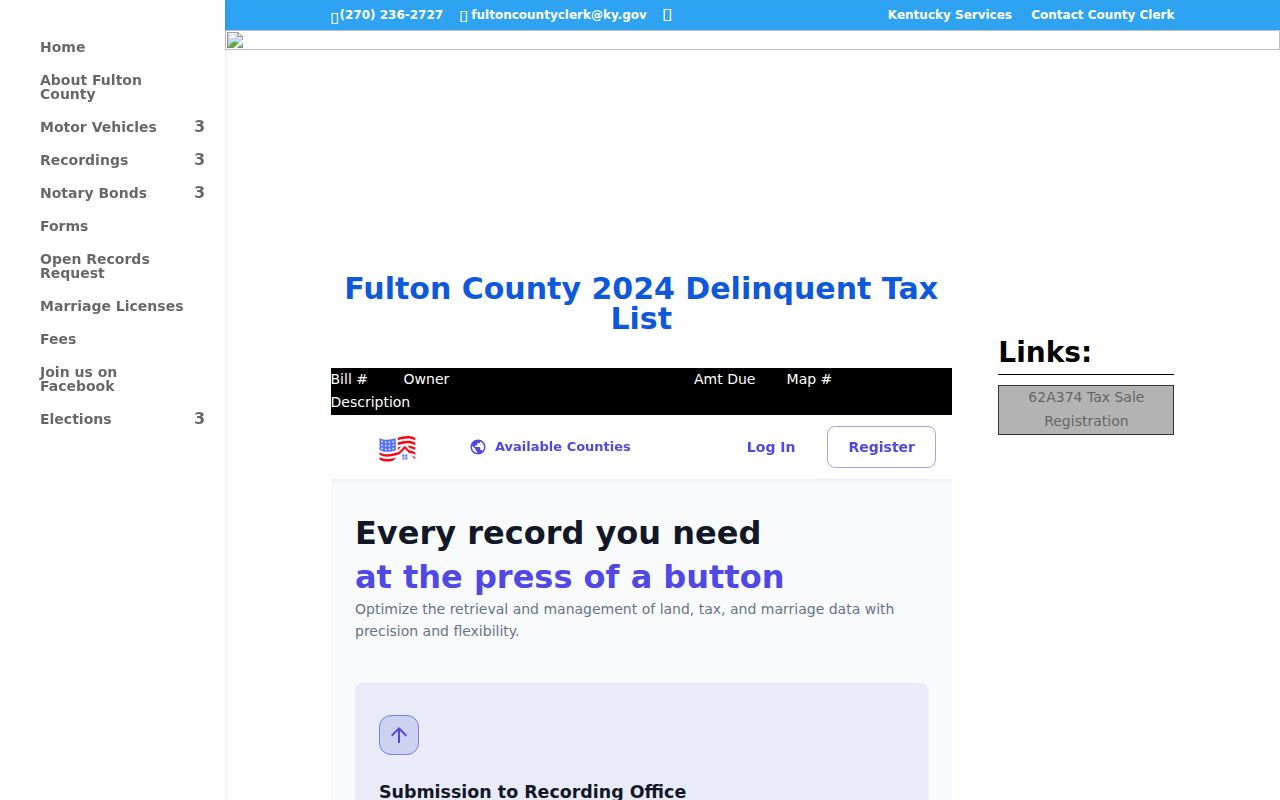
That list view carries a date. Treat any displayed amount as historical, not as today's payoff figure. Request a current balance from the collector before relying on a number from the page.
One 2024 auction notice for 603 Wells Street listed map number F-5-39-6. An address pairs neatly with a map number. That clearly helps track a parcel through a tax sale. One example, though, proves nothing about the format of every parcel number in the county.
Fulton Certificates and Tax Sales
The Fulton County Sheriff site provides the tax contact pictured below.

The county clerk's route covers certificates and tax sale records, though the office publishes no public bill-search form for them.
Kentucky moves unpaid property tax bills through a fixed sequence: discount, face value, penalty, delinquency, certificate, notice, and possible enforcement. The state property-tax collection page lays out the official order of those stages.
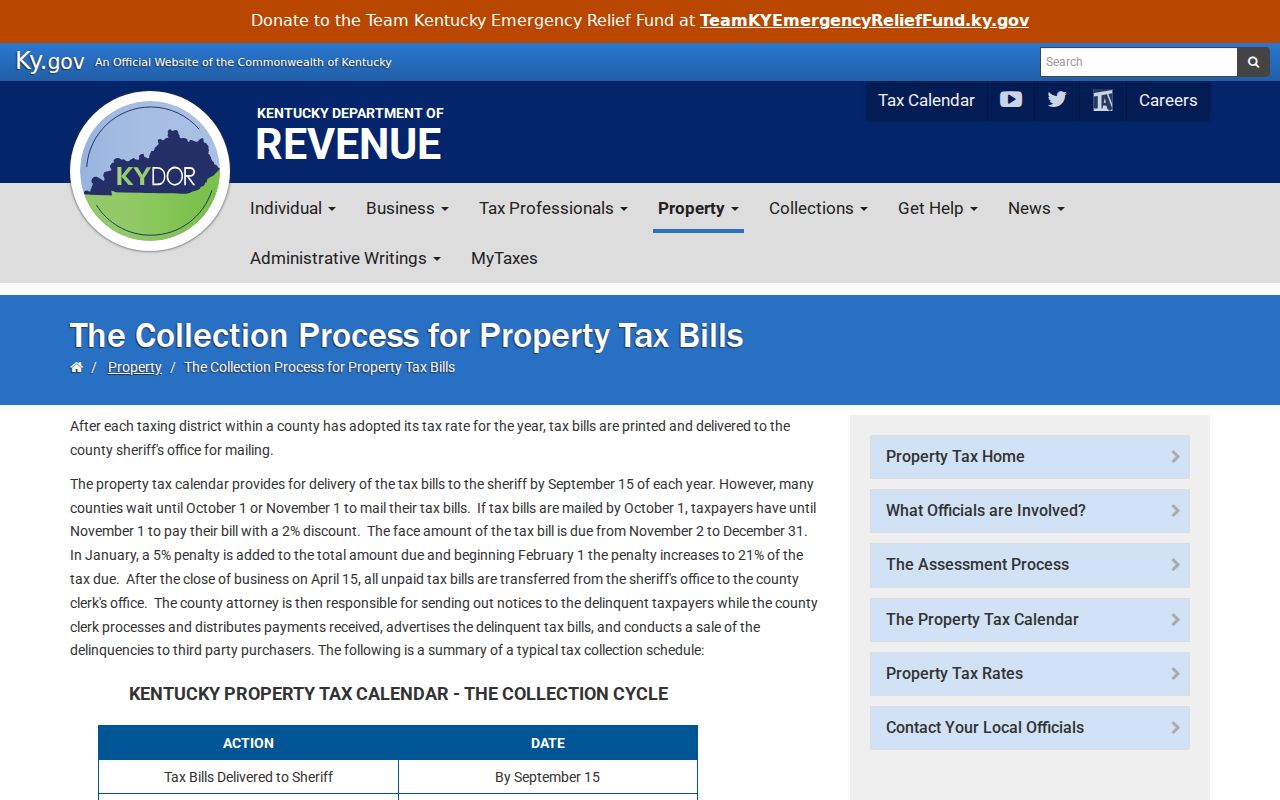
Statewide timing helps, but only Fulton offices can confirm where a specific bill stands. Ask them directly. A certificate of delinquency is not a deed. The buyer of a certificate gains a lien position, not fee-simple ownership. Redemption rights and statutory notices still govern the outcome. Fees, a possible court proceeding, and an eventual deed all still apply.
The Fulton County Attorney delinquent-tax page handles collection and payoff questions. It is the place to start. Request the certificate holder, the current payoff figure, how payments post, and the sale status. Then check the County Clerk's deed records before trusting any ownership claim. Property tax records alone cannot show title to the parcel. A certificate purchaser may never have obtained a deed.
Contest a Fulton County Assessment
Kentucky starts every assessment dispute the same way. The owner meets with the PVA during the inspection period. That conference comes first. If nothing gets resolved there, the appeal moves on to the county board of assessment appeals under KRS 133.120. The statute and the annual tax calendar set the deadlines. They shift from year to year. Verify the current dates instead of relying on an old deadline.
Evidence should tie to the valuation date itself. Comparable sales, photographs, repair estimates, a survey, or a full appraisal all work. So do facts showing the property record is simply wrong. Say plainly what the fight covers. It may be over land, improvements, classification, an exemption, or the entire assessment. A complaint about the tax bill, without value evidence, may go nowhere. It may never reach the PVA's actual decision.
Appeal window. Contact the Fulton County PVA during the current inspection period and verify the board filing deadline before the statutory window closes.
Keep Fulton Tax Years Separate
Kentucky Revenue publishes the property-tax calendar each year. It spells out the discount, face amount, penalty, and delinquency windows. The PVA sets the assessment. The collector sends and takes payment on the bill. Neither act touches the deed. Paying or disputing a bill changes no ownership, and recording a deed will not reopen an assessment appeal window you already missed.
Comparing tax years takes discipline. Ask for the certified roll entry and the exact bill status for each year in question. Ask for the exact bill status for each year too. Keep PVA conference notes, your evidence, the board filing, and the final decision filed together. If the real issue is an owner name after a sale, bring the recorded deed. Ask each office to update its own system.
A complete Fulton County property tax file holds every piece. Keep the assessment notice, the roll entry, any exemption decision, the bill, the payment receipt, delinquent notices, and appeal rulings together. Label each document by tax year. If the property sold mid-year, note the deed recording date. Set it beside January 1. That chronology usually reveals the truth. An apparent mismatch may stem from a late payment. It may also come from a later deed, a classification change, or an office update still working through the system. Route questions accordingly. Ask the PVA about value and roll matters. Go to the Sheriff for the active collection stage. The clerk or County Attorney handles delinquent certificate issues.